✓
Supply-line leaks and slow drips
A small leak under a sink or behind a refrigerator can soak cabinetry and drywall for days. We look for wicking up walls and wet toe-kicks where mold often starts.
Serving Jacksonville, Florida & surrounding areas
24/7 Emergency Response
One call instead of ten No web forms, no callback spam 24/7 Emergency Response
Mold response · Jacksonville, Florida
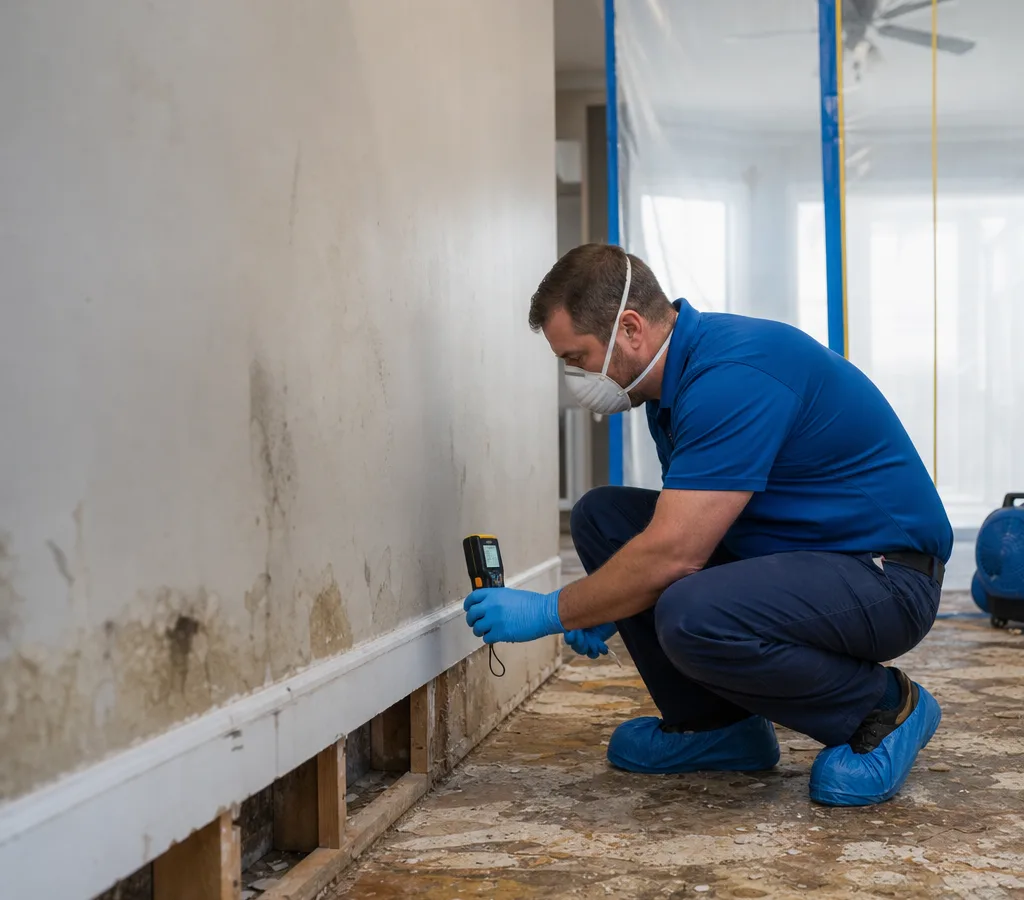
If a leak, overflow, or stormwater left things damp, mold can start fast. We inspect, dry, remove contaminated materials when needed, and remediate safely so your property and indoor air recover with a clear plan.
A real person answers - 24/7 Emergency Response
A real person answers - 24/7 Emergency Response
Moisture response
Jacksonville area
✓Moisture mapping
✓Controlled containment
✓HEPA cleaning
✓Dryness verification
Hidden moisture drives growth
Searching for mold after water damage Jacksonville usually means one thing: the water is gone—or mostly gone—but the building still is not dry. Mold only needs moisture and an organic food source. In homes and commercial spaces, that food source can be paper-faced drywall, wood framing, carpet backing, dust in HVAC returns, and even the glue under flooring.
Jacksonville's humidity makes it easier for damp materials to stay in the mold-friendly zone if drying is delayed or incomplete. A wet wall cavity, a damp subfloor under vinyl, or insulation that never fully dried can keep feeding growth even if the surface looks fine.
The goal is not to mask odor or spray something and hope. Proper remediation focuses on finding where moisture is still present, isolating the affected area to keep spores from spreading, removing or cleaning impacted materials based on the contamination level, and correcting the moisture condition so it does not return.
A scope based on conditions
Mold work after a water loss should start with an honest assessment. Some situations are limited to a small, accessible area. Others involve hidden moisture and multiple building layers.
What we do:
What we do not:
If you are still dealing with the initial loss, our team at Jacksonville FL Water Damage Restoration can coordinate the drying and remediation steps so you are not juggling multiple timelines.
Water-loss scenarios
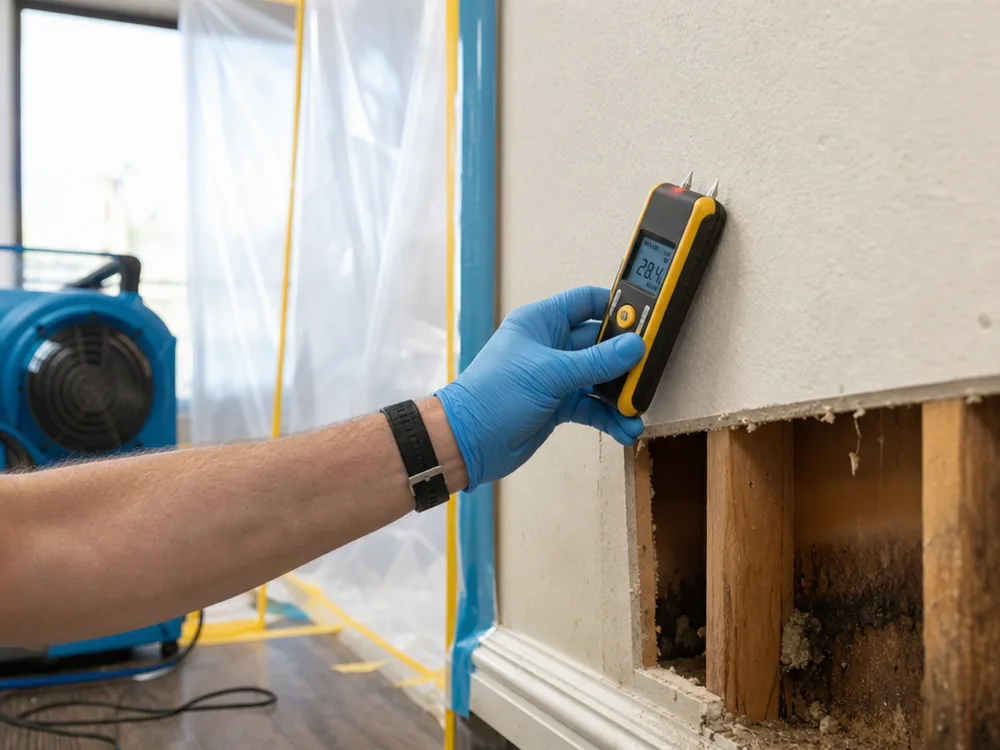
A small leak under a sink or behind a refrigerator can soak cabinetry and drywall for days. We look for wicking up walls and wet toe-kicks where mold often starts.
Clogged condensate lines and pan overflows can keep a closet or utility area damp. We focus on drying cavities and cleaning affected framing and drywall paper.
Water can migrate under tile, into adjacent rooms, and down through subfloors. We trace moisture paths so remediation matches the real spread, not just the stain.
Small roof intrusions can wet insulation and ceiling drywall without obvious pooling. We check attic-side moisture and ceiling cavities where growth can be hidden.
After heavy rain events, moisture can enter through doors, windows, and low spots. Rapid drying and targeted containment help prevent secondary mold issues.
Measured process
Jacksonville area
From assessment to handoff
We identify where water traveled, what materials stayed wet, and whether there is visible growth or odor. We also note any HVAC return paths that could spread particulates.
Before disturbing materials, we set boundaries: what is affected, what stays, and what must be protected. When needed, we use containment, protective equipment, and negative air filtration.
Contaminated porous materials are removed in a controlled way. Remaining surfaces are HEPA vacuumed and cleaned using methods appropriate for wood framing, masonry, or other substrates.
We dry the structure using dehumidification and air movement appropriate to the space and materials, then verify conditions are trending dry so mold does not immediately rebound.
Once the area is clean and dry, the space is ready for repairs and rebuild. If you are coordinating repairs with a contractor, we can align the handoff to keep schedules moving.
Jacksonville remediation pricing
Mold after water damage work in Jacksonville typically runs about $750 to $3,500 for a small, contained area, while larger or multi-room remediation with removal of drywall or insulation commonly lands around $3,500 to $12,000+. Pricing depends on how far moisture traveled, how much porous material must be removed, containment needs such as negative air and barriers, access in crawlspaces or tight closets, and whether drying equipment is required.
The exact cost is confirmed after an on-site inspection and moisture mapping, with a written scope that matches what we find behind the affected surfaces.
“After a washer overflow, the room smelled musty even though the floor looked dry. They found moisture behind the baseboards and in the lower drywall, set up containment, removed what couldn't be saved, and dried it out the right way.”
“We had water in an office suite and needed the cleanup handled without spreading dust and debris to the rest of the space. The containment and air filtration made a big difference, and the scope was clear from the start.”
Answers before work begins
Mold can begin growing within 24 to 48 hours when materials stay damp, and Jacksonville's humidity can keep building materials from drying on their own. The practical takeaway is to start drying and moisture checks immediately, then remediate anything that was wet long enough to support growth.
You may, because mold after water damage often starts in hidden cavities like behind baseboards, under flooring, or inside insulation. A moisture map and targeted inspection can confirm whether the structure is dry and clean, or whether a contained removal is needed to prevent ongoing odor and air quality problems.
Sometimes, yes, if affected materials are non-porous or the growth is limited to surface contamination that can be cleaned and the moisture issue is fully corrected. If drywall paper or insulation is contaminated, removal is typically the reliable option because porous materials do not clean back to a safe condition.
Often it is, as long as the work area is properly contained and occupants avoid the contained zone. For sensitive individuals with asthma, allergies, or immune concerns, or when large areas are involved, it may be better to limit time in the property until the active work and cleanup are complete.
Yes, we pay attention to returns, closets with air handlers, and nearby ductwork because spores and dust can travel when air is moving. If we see signs of contamination or ongoing moisture around HVAC components, we will note it and recommend the appropriate next step.
Stop the water source if it is still active, avoid running fans that blow across visible growth, and keep doors to the affected area closed if possible. If you can do so safely, remove small items from wet flooring and blot standing water, but avoid opening walls or pulling up flooring until the scope is assessed so contamination does not spread.
Start with an inspection
Tell us what happened and where you are seeing moisture, odor, or staining. We will schedule an inspection, explain what is affected, and provide a written scope for safe remediation and drying.