✓
Plumbing leaks inside the wall
Small supply-line or drain leaks can wet insulation and studs without showing much on the surface. We trace moisture patterns vertically and at plate lines to narrow the likely source area.
Serving Jacksonville, Florida & surrounding areas
24/7 Emergency Response
One call instead of ten No web forms, no callback spam 24/7 Emergency Response
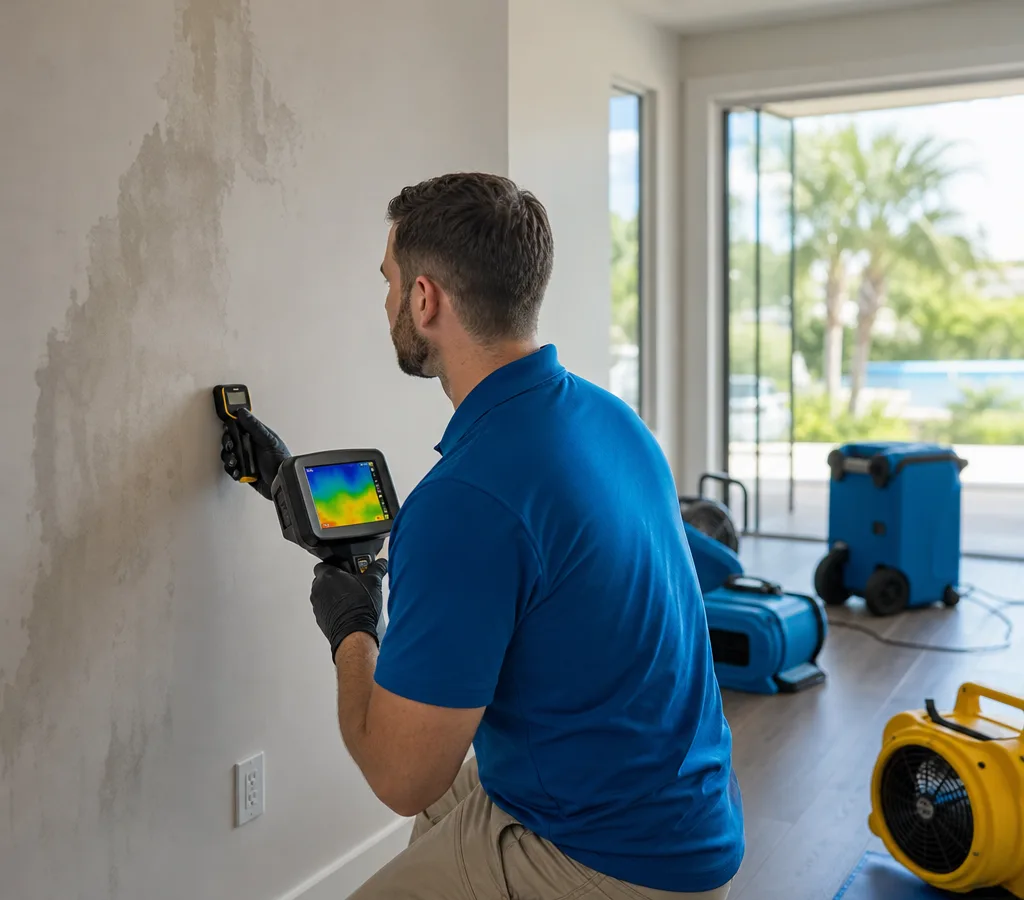
Hidden moisture detection · Jacksonville, Florida
If a wall feels damp, smells musty, or paint is bubbling, moisture may be trapped where you can't see it. Our team locates the wet areas fast, explains what's happening, and sets a drying plan that protects drywall, framing, and indoor air.
A real person answers - 24/7 Emergency Response
Moisture mapping
Jacksonville area
✓Moisture-meter readings
✓Thermal imaging
✓Targeted access when needed
✓Homes, condos, and businesses
Moisture can travel out of sight
Searching for hidden moisture water behind walls Jacksonville usually means you have signs of water, but no obvious puddle: a faint musty odor, baseboards swelling, peeling paint, staining that slowly grows, or a wall that feels cooler or softer than the surrounding area.
Water can travel inside wall cavities and show up far from the source. In Jacksonville's humid conditions, damp building materials can stay wet longer, which increases the odds of microbial growth and drywall damage. The goal is to confirm where the moisture is, how far it spread, and what building materials are affected, then dry the structure back to normal moisture levels.
We handle this work for homes, condos, and light commercial spaces across Jacksonville. For an overview of our company and how we schedule inspections, you can review Jacksonville FL Water Damage Restoration.
Measured before walls are opened
You can't rely on surface symptoms alone. We use a combination of non-invasive tools and targeted checks to map moisture inside and around wall assemblies:
In older areas such as Riverside and Avondale, layered repairs over time can hide pathways where water travels behind trim, plaster repairs, or multiple paint layers. In newer neighborhoods like Nocatee-style subdivisions on the Jacksonville side of the metro, tight building envelopes can hold moisture in wall cavities longer if a small leak goes unnoticed. Either way, accurate mapping is what keeps the repair scope reasonable.
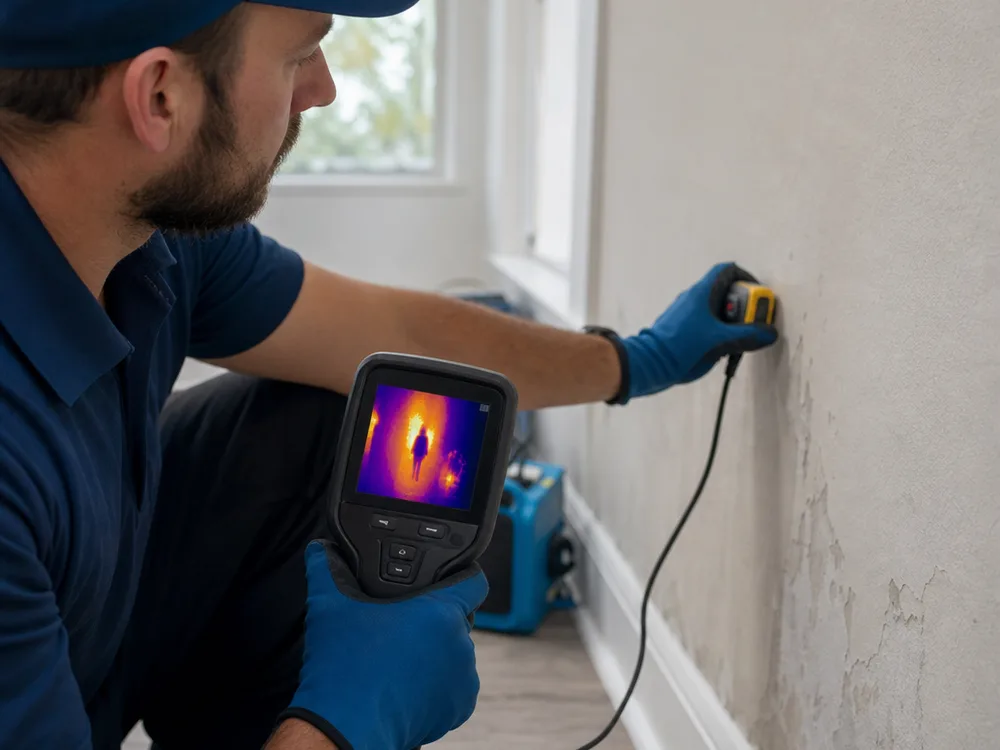
Follow the moisture to its source
Small supply-line or drain leaks can wet insulation and studs without showing much on the surface. We trace moisture patterns vertically and at plate lines to narrow the likely source area.
Wind-driven rain can follow framing members and show up as stains well below the entry point. We look for directional patterns and moisture gradients that suggest intrusion.
Clogged condensate drains, leaking air handlers, or sweating ductwork can add water to cavities near closets, utility rooms, and exterior walls.
Loose escutcheons, failed caulk lines, and slow fixture leaks can keep a wall damp for weeks. We check adjacent rooms because water often migrates.
High indoor humidity can condense on cooler surfaces inside walls. We verify whether you're dealing with liquid water, vapor drive, or both, because the fix is different.
Dry the structure, not just the surface
Drywall is porous and can lose integrity once it stays wet. Wood framing can also hold moisture, and insulation can trap it against studs and sheathing. The practical risk is not just visible damage, but hidden damage that keeps spreading.
A good moisture response focuses on three things:
In Jacksonville, humidity can slow evaporation if the space isn't controlled. That's why drying plans often include dehumidification and airflow management, not just running fans in the room.
📞 Jacksonville • 24/7 ResponseA real person answers - 24/7 Emergency Response
Measured drying
Jacksonville area
From detection to verification
We start by identifying symptoms, taking readings across affected and unaffected areas, and drawing a clear boundary of the wet zone. You'll get an explanation of what the instruments show and what they don't.
If there's a chance of dust or microbial impact, we take precautions to protect adjacent rooms, flooring, and contents before any access or drying begins.
When moisture is trapped, controlled openings can release humidity from the cavity and allow direct drying. The goal is the smallest access needed to dry correctly.
We place equipment based on readings and room conditions, then monitor progress. Drying isn't finished when the surface feels dry; it's finished when moisture readings support it.
We re-check affected areas and document that materials have returned to acceptable moisture levels so repair decisions are based on current conditions, not stains from the past.
Jacksonville detection and drying costs
Most Jacksonville hidden-moisture investigations and initial drying plans typically range from about $350 to $1,500, depending on how many rooms are affected and whether equipment is needed. Smaller jobs may be limited to detection and a short drying setup, while larger losses with multiple wet cavities can run $2,000 to $6,000+.
Your price changes with access (multi-story, tight chases), how far water traveled, wet insulation or framing, and how long materials stayed damp. The exact scope and cost are confirmed after on-site moisture readings and a written drying plan.
“We had bubbling paint in a hallway but no leak we could see. They mapped the wall, found the wet pocket, and explained why the stain was far from the actual issue. The drying plan was straightforward and the wall didn't need to be opened up everywhere.”
“The musty smell was coming and going. Their meter readings showed moisture behind the baseboard in two rooms, not just one. Once it was dried out properly, the smell stopped and the trim stopped swelling.”
Answers before walls are opened
The most common early signs are a musty odor, paint that blisters or peels, soft drywall, baseboards that swell, or a stain that slowly grows. In Jacksonville, high humidity can mask the problem at first, so instrument readings are the reliable way to confirm whether a wall cavity is wet.
No, many locations can be identified with moisture meters and thermal imaging, then confirmed with targeted readings. We only recommend opening a wall when the data suggests moisture is trapped and can't be dried effectively from the room side.
Drying time is usually a few days, but it depends on how saturated the materials are, whether insulation is wet, and indoor humidity control. In Jacksonville's climate, dehumidification often makes the difference between steady drying and moisture that lingers in the cavity.
Hidden moisture increases mold risk, but it's not automatic. The deciding factors are how long materials stayed wet, the type of material (drywall and insulation are more vulnerable), and whether humidity stayed high. The priority is to locate the moisture and dry the structure correctly so conditions don't support growth.
Often we can narrow it down by the moisture pattern and readings, but some sources need a plumber or roofer to confirm and repair. We document what our moisture mapping shows so the right trade can fix the root cause without unnecessary wall removal.
If it's safe, shut off the suspected water source (or the home's water) and avoid running HVAC hard against a wet area until it's evaluated. Don't paint over stains or seal the wall, because that can trap moisture. An on-site moisture inspection is the fastest way to know the scope.
Start with moisture readings
Tell us what you're seeing and where it's happening. We'll schedule a moisture inspection, map the wet areas behind the wall, and give you a practical drying plan with the least disruption needed to fix the problem.